Hello fellow readers! Somehow we’ve made it to the end of June, which means we are already halfway through 2025! And that it is time for the Mid Year Freakout book tag. I’ve done this challenge for the last two years and am back for a third year to share with you my answers to this viral book tag.
1. How many books you’ve read so far. 24
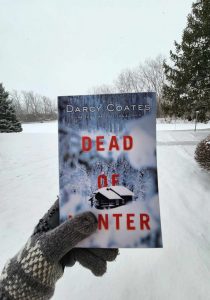
2. Best book you’ve read so far this year. This is a tossup between two wintery thrillers I read in the beginning of the year; The Gathering by C.J. Tudor and Dead of Winter by Darcey Coates. While they were both distinctively different, both enraptured me and I’m sure both will somehow end up in my top 10 best books of the year, unless this second half of the year has a whole lot of five star reads.
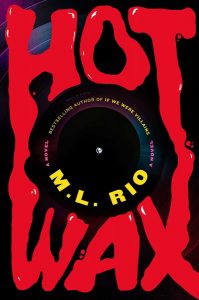
3. New release you haven’t read yet but want to. The answer to this question actually came to me just recently. As many of you know, M.L. Rio has written one of my favorite dark academia books, If We Were Villains, and her novella, Graveyard Shift, was fantastic. In 2025 she is releasing her second novel, Hot Wax, and while I have no idea what it is about, you better believe I will be picking it up when it is released in the fall and will read it before the end of the year.
4. Biggest disappointment. Unfortunately, I have had a couple of disappointments this year. But the one that hurt the most was Blue Sisters by Coco Mellors. I really thought this was going to be a five star read but it just wasn’t what I hoped it would be.
5. Biggest surprise. I’m going to have to say Lisa Jewell’s None of This Is True. I suspected this one was going to be good but the fact that it kept me guessing until the end made it a very welcome surprise, especially after how dismal my spring reading journey went.
6. Favorite new author (debut or new to you). Darcey Coates. After reading Dead of Winter I will be reading more of her works in the future.
7. Newest fictional crush. Going to have say no one. I don’t have many book crushes, I need a visual.
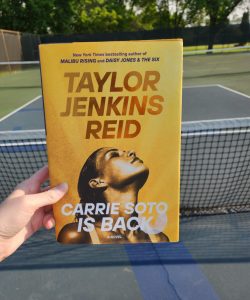
8. Newest favorite character. Likewise, there hasn’t been a new character that I have come to adore. I did admire Carrie Soto from Carrie Soto Is Back so I’ll go with that.
9. Book that made you cry. I haven’t had a good book cry yet this year though the closest came in Carrie Soto Is Back.
10. Book that made you happy. I mean, who can read a Finlay Donovan book and not be happy?
11. Favorite book to film adaptation that you’ve seen this year. I have no answer for this one. I haven’t read any books that are have been adapted. That being said, I do hope to get to The Thursday Murder Club this summer before the movie drops on Netflix.
12. Most beautiful book you have acquired this year. I did acquire the stunning, special edition of The Seven Husbands of Evelyn Hugo. It has sprayed edges and amazing artwork inside the book itself. Simply gorgeous!
13. Best sequel you’ve read so far. I have only read one sequel this year and that is Finlay Donovan Jumps the Gun.
14. What books do you need to read before the end of the year? Quite a few but I am prioritizing Hot Wax by M.L. Rio, This Book Will Bury Me by Ashley Winstead, and the newest releases from my fellow indie writers.
In the 1970s and 80s one woman reigned supreme in women’s tennis and that was Carrie Soto. Born to an immigrant father and told from birth that she was going to be the greatest female tennis player in history, Carrie trained hard and eventually became the queen of tennis. That is until she suddenly retired after a string of losses. Now, several years later, a new tennis champion, Nicki Chan, is threatening to break Carrie’s record of 20 Slam titles. Carrie can’t let that happen and so she comes out of retirement for one last chance at glory.
One thing that I have always admired about Taylor Jenkins Reid’s writing or, to be more precise, her choice of stories, is that she picks topics that is not written about often. She choses unique stories and Carrie Soto Is Back is one of her most unique. There have, of course, been other stories focusing on tennis and female players but Ms. Reid always manages to breath new life into the topic.
As always, Ms. Reid’s characters are well flushed out and the story moves at a good pace. There are some parts that perhaps could have been left on the draft manuscript but for the most part I didn’t find myself losing interest in Carrie’s story. One of the strongest elements of Carrie’s journey is the relationship she has with her father, to the point that I wish Ms. Reid would have explored it even further. We get a good idea of their relationship from the start but I would have loved to have seen a bit more of it. Additionally, with the exception of the first couple of chapters, we don’t get a good idea of the mother’s role in Carrie’s life and while this is due to what happens to her character, I feel like that was a missed opportunity for the book.
Out of the three Taylor Jenkins Reid books I have read, Carrie Soto Is Back is my second favorite. The gold medal still belongs to The Seven Husbands of Evelyn Hugo but Carrie Soto easily knocked Daisy Jones and the Six down to third.
Hello fellow readers! With June now here, it is now time for my Spring 2025 Wrap-Up. Check out all my thoughts on the books I picked up (and some cases put down) during the Spring 2025. What did you read?
They Wish They Were Us by Jessica Goodman – Not starting on the best note, my first read of Spring 2025 was a DNF. I knew going into this that it was a young adult book, but Ms. Goodman’s story read very young for a young adult. If you have someone who is just moving into young adult stories, this would be a perfect book to pick up. Unfortunately for me it just read a bit too young.
Normal People by Sally Rooney – Moving on to adult, Normal People was a highly anticipated read for me in 2025. Knowing how beloved Sally Rooney is, I had some expectations for this story that unfortunately fell flat. The story was not compelling and I found myself not connecting with either the story or the characters. Also, Ms. Rooney did one of the few things I greatly dislike in books and that is no parenthesis around the text when someone was talking. This is not a deal breaker for a lot of people but for me it is and I had to put the book down after almost 100 pages.
Finlay Donovan Jumps the Gun by Elle Cosimano – Now here is a book I greatly enjoyed. Unlike Normal People I went into the third Finlay Donovan book with low expectations, based on how disliked it is by the fandom and other book reviewers. However, after reading the story, there was nothing about it that turned me off from the series. Yes, the story itself fills a bit like a filler for the overall Finlay Donovan story and that is why I didn’t give it five stories like the previous entries, but I still enjoyed the hijinks of Finlay and Vero and will continue on in the story. A solid four star read.
Bunny by Mona Awad – Now let’s talk about a really weird book that I still don’t know how to grade. For those of you who get my newsletter (and if you aren’t signed up, what are you waiting for? Link at the bottom of the main page) you will know that Bunny was one of the twelve books I planned on getting to in 2025. It’s dark academia and has a cult following so I was happy to pick it up this season. And to say this book isn’t for everyone is an understatement. The first half of the story was easy enough to follow, but it takes a sharp turn into crazy town by the second half and I was left not exactly sure what to make of the story. I haven’t given it a star rating and I don’t think I will, only because I have no idea how to do it justice. Either way, if you enjoy a book that has a concept that is out of the box, Bunny might be the one for you.
The Dance Tree by Kiran Milwood Hargrave – This historical fiction novel takes place in 1518 France and centers around a dancing epidemic (yes, really. Check it out, a very bizarre story). The story follows Lisbet, a pregnant farmer’s wife whose sister-in-law was involved in a scandal that resulted in her being packed away for seven years. But now she is back, along with strange events occurring in the town. It was a good set-up but The Dance Tree failed to live up. I do give Ms. Hargrave an extra star for writing a historical fiction story set in a less discussed time period, but other than that there isn’t much else to say. Three stars.
Blue Sisters by Coco Mellors – A literary fiction focusing on the three surviving Blue sisters, Blue Sisters is very much a character study and an analysis of how grief can affect the family unit. As the Blue family approaches the one year anniversary of the death of the fourth sister, the three girls reflect on their past and where they are now. As they come together one last time to get the family home ready for sale, they are forced to confront their past mistakes and their unclear futures. Blue Sisters is a book I had been excited to read for a while now and unfortunately it didn’t meet my expectations. While Ms. Mellors is a gifted writer and some of the sentences she weaves together are impressive, there wasn’t enough here for me to rave about. Another three star read.
The Heiress by Rachel Hawkins – Unfortunately, I think this is the year where I have to admit to myself that while Rachel Hawkins’ books have really interesting premises, they almost never live up to their potential. The exception to this is probably The Wife Upstairs, which I gave four stars, but everything else has fallen underneath that and The Heiress is no exception. This was sadly another DNF for me. I got 100 pages into the story and had no connection with any of the characters or, frankly, cared about the plot.
She Started It by Sian Gilbert – Best friends Annabel, Esther, Tanya, and Chloe seem to have the world at their feet. They are all successful, beautiful, and still close to one another after many years of friendship. They are hard to forget, which may explain why they suddenly get invitations to attend the hen party of Poppy, a girl they went to school with. Only odd part is, the four friends were never close with Poppy and were more like bullies to Poppy than friends. From the summary, you can tell that She Started It has an interesting premise. That being said, if you have read a thriller book in the last few years, you have probably already read this book. There are a couple of plot twists in this story, all of which I mostly guessed and the big reveal at the end was something any reader would have picked up on at the beginning of the book. Still, for the occasional reader there are plenty of thrills and it is fairly enjoyable. 3.5 stars.
A Likely Story by Leigh McMullan Abramson – I’ll admit, I had never thought of picking up A Likely Story. It had never been on my radar and the only reason why I had a copy of it was because I got it on clearance at one of Barnes & Noble’s end of the season sales. And, honestly dear reader, I need to stop doing that. A literary fiction centering on a grieving daughter and her now deceased mother, through a series of flashbacks, A Likely Story focuses on family relationships and what some people have to give up in order for other people to succeed. In this case, the mother sacrificing her career so her husband could become a successful writer. But, Ms. Abramson’s writing didn’t click for me and very quickly I started to lose interest. A DNF for sure.
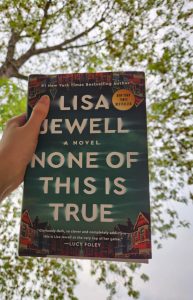
None of This Is True by Lisa Jewell – Guess what reader? We are actually ending on a strong note! I know, kind of surprising given how I’ve graded all the other books, but None of This Is True is an excellent read. If you want a full review, you can head to https://rachelrheil.com/blog/2025/06/none-of-this-is-true-by-lisa-jewell-review/. A great, slow burn read that deservedly earned 5 stars from me.
On her forty-fifth birthday, Josie is able to convince her husband to go out for a celebratory birthday dinner. While she should be celebrating this milestone, Josie can’t help but feel that her life hasn’t turned out the way she hoped. She married young, had her two daughters early, and is now stock in a rut. And she might if she had stayed in that rut if she didn’t run into Alix Summer.
Alix, as it turns out, is Josie’s birthday twin. Both women were born not just on the same date but the same year and in the same hospital. But that’s where their similarities end. Unlike Josie, Alix is a successful podcaster who rose to fame for producing a podcast focusing on successful businesswomen who overcame impossible odds. She married later and now has two small children. Her life sounds perfect, but Alix is bored with her podcast and longs for something different.
Josie turns out to be the perfect guinea pig. She’s more than willing to talk to Alix and, as it turns out, has a lot to share. As the two women go deeper into the podcast, Alix begins to suspect that Josie is not everything she appears to be and yet Alix doesn’t want to rush to conclusions. But with some many things not adding up, Alix is forced to decide, does she believe Josie or is everything a lie?
If it were not for work and other adult responsibilities, I am sure I would have finished None of This Is True in one sitting. While it as a slow start, it continually gains momentum until you just can’t stop reading the last 100 pages. Ms. Jewell crafts a complicated plot where the reader is not sure what to believe. The reader, along with Alix, attempts to decide if Josie is telling the truth or not but even until the very last page, they are left questioning what actually happened and what didn’t.
And this is the major strength of the novel. While some might find this frustrating, I found it smart on Ms. Jewell’s part. How often do we hear about someone or something in our everyday lives that leaves us unsure of what the truth is? We don’t always know the truth and Ms. Jewell plays with the idea in this thriller. While some things are eventually proven to be lies or truths, others are much grayer and I applaud Ms. Jewell for that.
Hello fellow readers and happy June! It’s officially the kickoff of the summer season and to celebrate I’m here to share my Summer 2025 TBR. Make sure to stick around as I will soon be posting my Spring 2025 Wrap-Up, a 5 star book review, and my Mid Year Freakout post. Plenty of fun things to share so make sure you subscribe and check back in. Now, without further ado, here are the books I’m hoping to get to this summer.
The God of the Woods by Liz Moore – Last year Ms. Moore’s Long Bright River ended up as one of my honorable mentions for best books of 2024. Despite her works being quite long, they hold my attention and I’m expecting the same for her latest release, The God of the Woods. Set at a summer camp in 1975, where a thirteen year old girl goes missing we follow a camp counselor trying to find her. But this might not be all it appears to be and I’m sure the ending will provide quite the interesting twist.
A Flicker in the Dark by Stacey Willingham – When Chloe was a child, six teenage girls went missing. The killer was caught, and the killer turned out to be Chloe’s father. Twenty years later, Chloe has started a new life for herself. But when girls begin to mysteriously disappear again, Chloe finds herself drawing parallels between the events happening now and those that occurred all those years ago. Is she making connections that aren’t really there or did the police arrest the wrong man? A Flicker in the Dark promises to be a delicious, twisty turny thriller and I can’t wait to finally pick this one up.
One Italian Summer by Rebecca Serle – What’s summer without a good book that transports you to another country? And is there a better country to daydream about during this hot summer months than Italy? Following a young woman who goes on a two week holiday in Italy, this promises to be a fun, heartful, and humorous story that will make me dream of pasta, Aperol spritzes, and gelato.
Carrie Soto Is Back by Taylor Jenkins Reid – While beloved by the BookTok community, Taylor Jenkins Reid is an author that is either a hit or miss for me. I loved The Seven Husbands of Evelyn Hugo but didn’t see the hype for Daisy Jones and the Six. Which way will Carrie Soto fall? So far (I just picked this one) so good. It follows a retired tennis player who decides to re-enter the world of tennis after a new, younger woman threatens to break all her records. Will I want to become a tennis fanatic after this? I’ll report back soon to let you know.
Bad Tourists by Caro Carver – A 2024 release, this thriller focuses on three sisters who go on a post divorce trip to the Maldives. But while the women hope to unwind and forget about their messy divorces, a killer is lurking amidst the picturesque resort and the three friends will have to work together to catch the killer.
People We Meet on Vacation by Emily Henry – So my first dive into an Emily Henry book wasn’t exactly a smashing success. I gave Happy People three stars but once I heard from other book reviewers that they agreed that book wasn’t one of her best, I decided to give Ms. Henry another chance and pick up one of her works that is absolutely adored, People We Meet on Vacation (it was also available at my local Half Price Books, a rarity so I figured it was a sign). Centered around Poppy and Alex, who had been friends for a decade before a bad following out, they find themselves once more vacationing together and romance inevitable ensues.
The Thursday Murder Club by Richard Osman -A leftover from my Spring 2025 TBR, I really need to get to this mystery thriller since the Netflix adaptation is hitting sometime this summer.
Before We Were Innocent by Ella Berman – Ten years ago, three friends went on a vacation to Greece. But only two came back. While never convicted, the two surviving girls fell under public scrutiny. While one tried to get on with her life and another chose to capitalize on the infamy, the events of that fateful trip are about to bubble to the surface all over again. I haven’t heard much else about this book, reviews wise, so I’m excited to see if I have stumbled upon a hidden gem.
The House Across the Lake by Riley Sager – Last Summerween I read my first Riley Sager book (The Only One Left) and I found it be very quick and all consuming read, a hard one to put down. Two years earlier Mr. Sager released another summer book that got everyone talking; The House Across the Lake. Focusing on Casey, a recently widowed actress, who is spending some time at her family’s remote cabin. When she saves a neighbor from drowning, Casey becomes entangled in another couple’s lives until one day the wife goes missing. Promising to a an adrenaline filled ride, I’m looking forward to reading my second Riley Sager novel.
The Wedding People by Alison Espach – This romance book was not on my radar until the end of last summer when one of the bookstagram accounts I follow (@emilybookedup) couldn’t stop raving about it. Focusing on Phoebe, a young woman heading to Newport, Rhode Island for a vacation, she gets sucked up in a wedding she has nothing to do with and hilarity becomes the order of the day. The premise itself doesn’t sound overly interesting but given how much hype I’ve heard I’m willing to give it a try. And who can go through summer without a good wedding book?
I’m excited to share with you the Readers’ Favorite review of Love and Betrayal in the City Lights! Below is the review and thank you to both Readers’ Favorite and Divine Zape for the wonderful review!
Love and Betrayal in the City of Lights by Rachel R. Heil is an intriguing tale set in Nazi-occupied Paris, following the intertwined lives of young intellectuals, artists, and ordinary citizens as they struggle with love, loyalty, and betrayal. In 1941, aspiring poet and philosophy student Jean Janvier wants nothing more than success. His world revolves around deep conversations at the Café de Flore and the bond with his sister Josephine, all under the watchful eyes of their ambitious parents. When the beguilingly beautiful Annette Zabek enters his life, Jean’s carefully crafted universe is altered. As their romance deepens, secrets threaten to tear them apart — Annette is Jewish, which is not just disturbing but dangerous given the Nazi crackdown. What follows is haunting, and in 1992, Josephine has many regrets despite a happy marriage.
Rachel R. Heil’s historical romance gripped me from the start, and there was no way of letting go. The characters are well-developed and feel like people I have met in life. Annette Zabek is a courageous young woman from Nancy who defies the oppressive regime to pursue her education. Minor characters, such as Claude, Bella, Jacques, and others, are well-drawn against a backdrop of academia, and some are entangled in clandestine activities, personal conflicts, and covert romances. The cultural setting in Nazi-occupied Paris is filled with tension and uncertainty, and I loved how the author conveys this in the story. Elements such as vivid imagery—Paris’s haunting streets and evocative cafes— enrich the narrative. The shifting perspectives deepen the emotional impact. Love and Betrayal in the City of Lights is suspenseful and delightful, and I enjoyed the incredible storytelling, the sparkling and often witty dialogues, and the realistic characters.
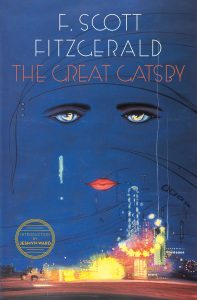
This exchange occurs between two of literature’s most famous characters, Nick Carraway and Jay Gatsby, both featured in F. Scott Fitzgerald’s timeless classic, The Great Gatsby. On this day, April 10, we mark 100 years since the publication of this American novel, which has an immeasurable impact of literature. It has been adapted into films on numerous occasions, inspired numerous spinoffs, and made us all want to go back in time and become a flapper.
Personally speaking, it is one of the core books that inspired my own literary journey, both in reading and writing. Like many Americans, I first picked up this book as a teenager in high school when it was assigned in my English Literature class. From the first page, even the first line, I was hooked and have never stopped loving this timeless story. Which put me at considerable odds with the rest of the students in class, who all seemed to take a dislike of Gatsby’s story but my own thoughts about why that may be will come later.
But even now, over a decade since I first picked up this story, I am reminded of Gatsby‘s literary impact, particularly about the themes and ideas at the core of the story. What are they and why are they just as important today as they were 100 years ago? I plan to answer that but first I want to talk to you about the tumultuous history of The Great Gatsby.
History of America’s “great novel”
F. Scott Fitzgerald published his magnum opus on April 10, 1925. At the time, Fitzgerald was one of America’s most celebrated authors, achieving success with his previous two novels, This Side of Paradise (1920) and The Beautiful and Damned (1922). At the time of its release, The Great Gatsby was met with positive reviews from literary critics but many noted it paled in comparison to Fitzgerald’s previous works. Whether because of this or because audiences did not take to the story or a combination of both, The Great Gatsby was a financial failure. By October of 1925 it had sold less than 20,000 copies. This seemed to be the beginning of the end for Fitzgerald’s career and while he continued to write, publishing a fourth novel, Tender Is the Night, in 1934, by the time he died in 1940 he viewed himself as a failure and that his work would be forgotten.
Thankfully, fate intervened.
F. Scott Fitzgerald (Image credit: Nickolas Muray)
During World War Two the Council on Books in Wartime distributed free copies of American novels to its soldiers. Among the books chosen was The Great Gatsby. The novel became a smash hit with the troops, who went on to share the story with their families and friends upon returning home. The new found popularity of Gatsby forced literary critics to re-examine the work, who found many of the themes and ideas to be as relevant in their present time as it was in 1925. Within a few short years the book was introduced into American high school curriculum which, as I mentioned earlier, is how I first came into contact with this story. By the turn of the century, millions of copies had been sold around the world, solidifying it’s place as one of literature’s most famous novels.
Now with the history out of the way, let’s talk about the themes of Gatsby. While there are quite a few of them, I’m going to limit myself to the top three. Also, an important note to make. It has always been my goal on this blog to make it as welcoming and neutral as possible, particularly when it comes to current day politics. While I will make every effort to do the same when discussing these themes and ideas, there will be sometimes when current day events will have to be drawn. As I have always said, everyone is entitled to their own opinions and beliefs. These are merely mine.
The illusion of the American Dream
Even if you don’t live in the United States, you have undoubtedly heard about the American Dream, the idea that if someone comes to America, they will have endless opportunities and will be successful, both in their personal and professional lives, regardless of where they started out in life. However, by 1925, this idea was beginning to lose some of its momentum. Writers in particular have always pointed out that the idea of the American Dream is an illusion. John Steinbeck discussed the idea of the American dream heavily in Of Mice and Men, demonstrating how difficult and almost impossible it is to achieve that ideal while admitting that, on some occasions, it can be achieved. Playwright Arthur Miller portrayed it as a fruitless pursuit in his 1949 play Death of a Salesman and, more recently, Hubert Selby Jr. used his novel Requiem for a Dream to show the dark side of the American Dream as his four main characters fight with addiction.
Fitzgerald proved to be no exception in Gatsby. Jay Gatsby, the main character, is the be the embodiment of the American Dream. We learn throughout the story that Gatsby came from virtually nothing and was able to accumulate great wealth and influence over the coming decades. This, of course, comes at a cost which included losing the love of his life, Daisy Buchanan, several years earlier. But now that Gatsby is rich and successful, he believes he can achieve his ultimate dream, which is winning back Daisy.
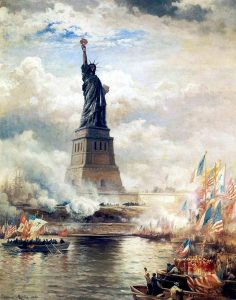
(The Statue of Liberty is often associated with the American Dream)
For those who have read the story, you know that does not end up happening and this decidedly sad ending is Fitzgerald’s way of demonstrating that the American Dream is not obtainable for everyone and merely an illusion created by the American government to convince everyday people to work even harder and turn more profits for big corporations and the government. It’s an arguably very cynical look at the world, but recent statistics has shown this idea is more relevant than ever.
In an article by journalist Michael Hobbes, it is noted how millennials are generally less well off than their parents’ generation, a first since the Great Depression. Despite being the most educated generation in American history, millennials have taken on 300% more student debt than their parents, they are 50% less likely to own a house as young adults were in 1975, one in five live in poverty, and based on current trends many won’t be able to retire until the age of 75. Not exactly the statics that back up the idea that everyone can achieve personal and professional success as authors of the American Dream would have one dream and while there are success stories to be found, they are becoming few and far between.
Fitzgerald’s ability to show the facade surrounding this concept demonstrates a deeper understanding of the American mind that critics, when first reviewing the story, were unable to pick on and it is understandable why. By 1925, America was in the middle of an economic boom and the idea that people couldn’t achieve everything they wanted seemed unbelievable but, as recent history has shown, it can unfortunately be a very real reality for many.
Sexuality and Identity
Even as a teenager, I remember reading Gatsby and being struck by the discussion and insinuation of sexuality and identity.
In particular, I’m talking about the characters of Nick and Daisy Buchanan’s best friend, Jordan Baker.
It is generally agreed upon by literary critics and historians that Nick and Jordan are closeted homosexuals. In one scene, Nick departs an orgy with a man who is described in feminine language and, following some suggestive ellipses, finds himself standing beside a bed while the man sits between the sheets in just his underwear. As far as Jordan, critics have noted that she is often described in masculine terms and, out of all the characters, seems to have the most honest conversations with Nick, leading some to believe that is because they share similar experiences with their sexuality.
While this can be open to every reader’s own interpretation, what is apparent is Fitzgerald used Gatsby to demonstrate the turning tide of gender stereotypes and sexuality in the 1920s. It was the first decade in which women were able to freely express themselves (not as freely as by today’s standards) by wearing shorter dresses, cutting their hair into bobs, and going out to clubs and drinking the night away. Additionally, this time in history saw the first steps towards acceptance to homosexuality. They might have been very small baby steps but in Germany, the decade saw some of the first transgender operations taking place and more gay clubs opening. This, of course, all came to scratching halt with the rise of Nazism in 1933, but it was a pivotal step nonetheless.
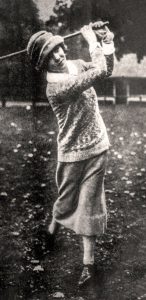
(Image Credit: Edith Cummings, the inspiration behind the character of Jordan Baker)
The theme of sexuality and identity and its importance to Gatsby continues to be felt today. While society has come a long way in terms of these topics, many still find themselves hiding their true identity for fear of their own safety. Hate crimes against the LGBTQ+ community continue to occur at a disturbing pace and women’s rights seem to be constantly be hanging in the balance. Only a few months prior to me writing this article, social media was sharing the courageous story of Ahoo Daryaei, who stripped down to her under garments and walked around one of Tehran’s universities in protest of the removal of women’s rights in the country and after she had been ordered by the country’s morality police to wear a headscarf. While Daryaei was eventually released from police custody, there is no telling what physical and psychological torture she might have experienced, a sad reality for many women who take similar steps.
The fact that sexuality and identity continues to be an ongoing struggle for many only fuels the importance of the theme in Gatsby. There are still groups of people around the world that face discrimination for who they are and by having works like Gatsby available it allows readers to connect with these individuals and create a society that is more accepting and tolerant of others.
The dangers of nostalgia
The third idea I want to mention that is extremely prevalent in Gatsby is that nostalgia can be filled with dangers. Throughout the story, Jay Gatsby longs to be reunited with Daisy while refusing to recognize that it is impossible to relive something that occurred in the past. Gatsby is nostalgic about the past, associating it with a glorious time in his life. However, as Nick regularly points out, Gatsby can not go back and repeat it. This romanticizing of nostalgia, Fitzgerald warns, can be dangerous.
This idea can be very true when discussing certain time periods in history. For example, the 1920s has been drenched in nostalgia to the point that most people would consider this period in time as a glorious one. The idea of staying out all night at clubs, listening to jazz music, and doing the Charleston sounds like a good time and even romantic, a theme that is, ironically, continually perpetuated by people picking up books like Gatsby. Yet, it was also a dark period as well. Racism and discrimination still ran rapid in the United States, most of Europe was on the brink of economic collapse, and the world saw a rise in fascism and communism. Despite this, one might be hard press to find someone who would mention any of those when asked about their thoughts of that time period. The nostalgia for the time period has blurred our perception of the era.
(Image Credit: Warner Brothers Pictures, the green light is often seen as a metaphor for Jay Gatsby’s desire to reach back into the past and relive it)
That is not to say it can’t be reversed, or at least made more realistic. For many decades after the end of the Civil War in the United States, there was a romanticizing of the South prior to the conflict. This has changed. As a society we now recognize that time period as a dark one as this “nostalgia” hid the ugly truth that it was built on the suffering of slaves.
The dangers of nostalgia is a vital theme to Gatsby. While Fitzgerald uses his novel to suggest that not all nostalgia is bad, it is important to be kept in check or we risk forgetting about the challenges that others faced during that time.
Conclusion
Since it’s revival in the 1940s, The Great Gatsby has remained a pivotal cornerstone of American literature. It’s influence is still felt to this day, a great shock it would undoubtedly be to it’s author. When F. Scott Fitzgerald died on December 21, 1940 at the age forty-four due to a heart attack, he was a shell of his former self. The young, successful writer that had written Gatsby fifteen years earlier was long gone and when the few critics who did remember Fitzgerald reflected on his work after his death, most came to the conclusion that he was nothing more than a failed alcoholic – the ultimate embodiment of Jazz Age decadence.
Earlier in this post I noted that when my English class read Gatsby almost all of my classmates disliked it. While I cannot recall all their exact criticisms, I do remember many stating they found the story completely irrelevant and Jay Gatsby’s longing to return to a time in the past as ridiculous. Who would want to live in the past?
I would argue that exact question is the real reason why they took a dislike to the story and why it is such an important book.
As sixteen year olds, the last thing any student wants to acknowledge is that there will be a point in their lives where it won’t be smooth sailing and they will have regrets. This is not to say that no teenager doesn’t acknowledge this or has never experienced any hardships in life but when one is that young, they are filled with optimism and hope for the future.
Yes, you are going to do well in college. Yes, you are going to get that six figure salary right out of the gate. Yes, you’ll be able to afford your rent with no problem and have plenty of money to save up for your house.
No, you will always be close with your friends with high school. No, that guy you thought you had a connection with on Bumble isn’t standing you up, he’s merely having car trouble and that’s why he hasn’t appeared for your date yet. No, pasta doesn’t make you fat, that’s just an old wives’ tale.
Gatsby is a novel that picks up the mirror and holds it in front of you, reminding you that not everything is going to be easy and life is not always going to be what you hoped it to be. But, you can still make the best out of it and while this might be hard to believe, especially if you know how the story ends, there is optimism in the story if you look for it.
At the beginning of the story, our narrator, Nick, is an idealistic young man who thinks anything is possible. By the end of it, Nick has grown up and realizes that the lessons he learned by observing Gatsby and his companions will be important stepping stones in his life. Not everything in life will go the way you want it to go, but that doesn’t mean it is the end. If Jay Gatsby had learned this he would have undoubtedly avoided his tragic ending.
Life is far from easy and struggles are a part of it. But if we beat on, boats against the current, we might just find the happiness and success we always wanted.
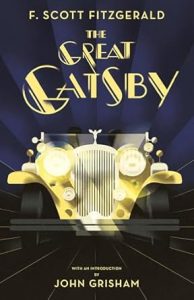
(Image Credit: Vintage Classics)
Sources:
Millennials are Screwed by Michael Hobbes, https://highline.huffingtonpost.com/articles/en/poor-millennials/
Iranian woman detained after undressing released with charge by Jacqueline Howard, https://www.bbc.com/news/articles/cwy42vxd99po
Hello fellow readers and happy spring! Well kind of. The first day of spring isn’t until a bit longer but if you are like me, once March hits, I’m ready to say goodbye to the snowy winter and hello to blooming flowers and pleasant temperatures.
I’m also ready to create my Spring TBR. Now, a quick disclaimer. I know there are exact months for every season, but I have my own definition of what months are part of spring, summer, fall, and winter. So for the sake of ease, I am classifying spring as March, April, and May. During this time I like to indulge in romance, literary fiction, dark academia, and historical fiction (that’s actually always on the table). I’ve put together a list of 10 books I’m hoping to get to in the next three months. Then, once the season is over, make sure to check back in as I do my Spring Wrap-Up, where I share all my thoughts on the books I read during the season. What books are you hoping to get to this season?
(Image Credit: Goodreads)
Normal People by Sally Rooney – No author seems to have had more of an impact on Millennials and Generation Z than Sally Rooney. Her stories are often timely and explore the complexities of the human experience. Or so I’ve been told. I’ve actually never read a Sally Rooney novel but this Spring I’m going to change that. I’m hoping to get to her most famous work, Normal People, which follows the ups and downs of Connell and Marianne and the consequences of their actions.
(Image Credit: Goodreads)
The Thursday Murder Club by Richard Osman – At a retirement village, four friends meet up once a week to solve cold murders. But when a murder is actually committed in their own village, the four band together to solve their first ever murder. Are they up to the challenge? This mystery, the first in a series, seems warm and funny. I’m hoping for some Finlay Donovan vibes.
(Image Credit: Goodreads)
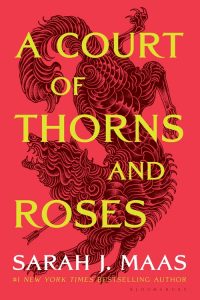
A Court of Thornes and Roses by Sarah J. Maas – On a total different note, I am hoping also to read the first book in the ACTOR series. A fantasy series that follows a huntress and faerie as a wicked enemy begins to take form and threatens their existence, this book has exploded in popularity over the last couple of years. I’m not much of a fantasy girlie, but I’m hoping to expand my reading interests with this TikTok favorite.
(Image Credit: Goodreads)
The Dance Tree by Kiran Millwood Hargrave – A short historical fiction read I’m hoping to get to this season, The Dance Tree takes place in France, 1518 when a dancing plague comes across the town our protagonist lives in. I don’t know much else about this story, but it sounds like an exciting read and could potentially become a great recommendation for anyone wanting to dive into different historical fiction stories.
(Image Credit: Goodreads)
None of This Is True by Lisa Jewell – Of course, my TBR always seems to have at least one thriller (or more). When two women, sharing the same birthday, have multiple run ins with each other, they can’t just assume it is a coincidence. As their friendship grows, a shocking disappearance thrusts one of the women into the spotlight and she must uncover an assortment of lies and secrets to get to the truth. I can already picture myself reading this Memorial Day weekend with a nice cold drink.
(Image Credit: Goodreads)
They Wish They Were Us by Jessica Goodman – Spring is also the season where I like to jump back into the dark academia genre. While there is nothing like reading one of these books during the Fall season when students return to school, Spring is a close second and this young adult novel takes place at an exclusive prep school where, three years ago, Jill’s best friend was murdered by her boyfriend. The boyfriend, Graham, confessed, and the case was closed. But now, as Jill enters her senior year, mysterious texts may cause her to second guess exactly what happened on that fateful night.
(Image Credit: Goodreads)
Finlay Donovan Jumps the Gun by Elle Cosimano – Finlay Donovan is back in this third installment of the series and I could not be more excited. While I do have some fears due to the fact that the third book hasn’t been as beloved as the first two, I am thrilled to be reunited with Finlay and her ever loyal sidekick Vero.
(Image Credit: Goodreads)
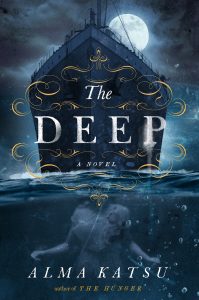
The Deep by Alma Kutsu – Every April I try to get to at least one Titanic book and this year it is going to be The Deep. I picked up a copy after finding it at a discount store and don’t know much else about it. I’ll make sure to report back to you at the end of the season.
(Image Credit: Goodreads)
Bunny by Mona Award – The second dark academia story on this TBR, Bunny is a novel I have been meaning to get to the last couple of years. The story follows a young girl at a university where she finds herself involved in a mysterious secret society of fellow female students who call themselves The Bunnies. From there, the story takes off. I have been warned I will either love or hate this book, and I am hoping for the first option to come true.
(Image Credit: Goodreads)
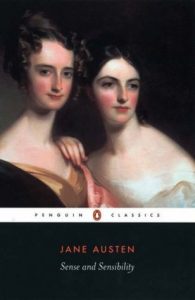
Sense and Sensibility by Jane Austen – Last year I did not read as many classics as I wanted to. This year, I am hoping to rectify that and to start that off I plan to read the one Jane Austen novel I have never picked up, Sense and Sensibility. It is said to have the perfect spring vibes and I am looking forward to adding it to my classics collection.
When her boyfriend Kiernan suggests they go on an exclusive hiking trip to the Rocky Mountains during the off-season, Christa is less pleased. But loves make one do stupid things and Christa reluctantly agrees to join Kiernan and a handful of other adventure seekers on the adventure.
Christa could not have made a worse decision.
Nearly upon arrival a furious winter storm slams the group’s tour bus and they are forced to seek shelter in a small cabin in the middle of the woods. Everyone, except Kiernan that is. He and Christa were separated from the group and while Christa is eventually able to find the others, Kiernan is no where to be found.
But that is about to be the least of Christa’s problems. When members of the group begin to go missing and their bodies turn up in a gruesome manner, Christa will need to use all her wits to make it through the storm.
Nearly from the start, Dead of Winter grabs you and straps you in for a nonstop horror ride of violence, horror, mystery, and thrills. The concept of a group of strangers being stranded by the elements is not a new concept but Ms. Coates is able to breath some new life into the otherwise mundane plot. The biggest strength of the story is how quickly things seem to get out of hand, building on a tension that has existed almost from page one when Christa and Kiernan get separated.
The characters are fairly flushed out and the challenges they encounter are both realistic and detailed. Of course, Christa has a previous trauma that plays a part in her decision making and that trauma inevitably comes up halfway through the story. In hindsight, I could see where the author was going with that previous event, but it was still interesting when it was revealed.
The reason why Dead of Winter did not get a full five stars is because of how it ended. Yes, the killer is revealed but there is a huge question left unanswered by the end (and if you have/read the story, you’ll probably understand what I’m alluding to). Nevertheless, Dead of Winter is still a good, nail biting horror novel that certainly keeps you interested. As far as the horror level of this book, I think I can saw it is bearable to someone who is new to the genre like myself. There are some detailed scenes of gruesome discoveries, but if you can stomach that (or at least skim over it), this book is well worth a read.

 Hello fellow readers! Somehow we’ve made it to the end of June, which means we are already halfway through 2025! And that it is time for the Mid Year Freakout book tag. I’ve done this challenge for the last two years and am back for a third year to share with you my answers to this viral book tag.
 4. Biggest disappointment. Unfortunately, I have had a couple of disappointments this year. But the one that hurt the most was Blue Sisters by Coco Mellors. I really thought this was going to be a five star read but it just wasn’t what I hoped it would be.
 10. Book that made you happy. I mean, who can read a Finlay Donovan book and not be happy?

 Hello fellow readers! With June now here, it is now time for my Spring 2025 Wrap-Up. Check out all my thoughts on the books I picked up (and some cases put down) during the Spring 2025. What did you read?
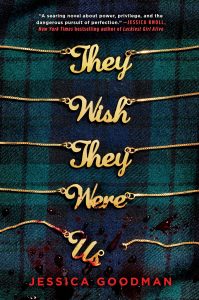 They Wish They Were Us by Jessica Goodman – Not starting on the best note, my first read of Spring 2025 was a DNF. I knew going into this that it was a young adult book, but Ms. Goodman’s story read very young for a young adult. If you have someone who is just moving into young adult stories, this would be a perfect book to pick up. Unfortunately for me it just read a bit too young.
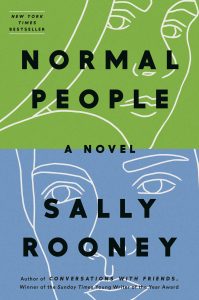 Normal People by Sally Rooney – Moving on to adult, Normal People was a highly anticipated read for me in 2025. Knowing how beloved Sally Rooney is, I had some expectations for this story that unfortunately fell flat. The story was not compelling and I found myself not connecting with either the story or the characters. Also, Ms. Rooney did one of the few things I greatly dislike in books and that is no parenthesis around the text when someone was talking. This is not a deal breaker for a lot of people but for me it is and I had to put the book down after almost 100 pages.
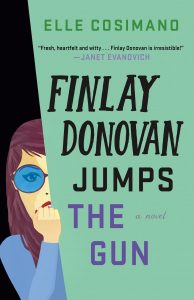 Finlay Donovan Jumps the Gun by Elle Cosimano – Now here is a book I greatly enjoyed. Unlike Normal People I went into the third Finlay Donovan book with low expectations, based on how disliked it is by the fandom and other book reviewers. However, after reading the story, there was nothing about it that turned me off from the series. Yes, the story itself fills a bit like a filler for the overall Finlay Donovan story and that is why I didn’t give it five stories like the previous entries, but I still enjoyed the hijinks of Finlay and Vero and will continue on in the story. A solid four star read.
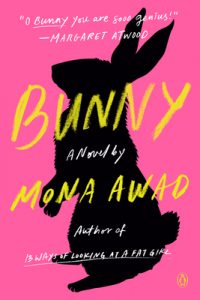 Bunny by Mona Awad – Now let’s talk about a really weird book that I still don’t know how to grade. For those of you who get my newsletter (and if you aren’t signed up, what are you waiting for? Link at the bottom of the main page) you will know that Bunny was one of the twelve books I planned on getting to in 2025. It’s dark academia and has a cult following so I was happy to pick it up this season. And to say this book isn’t for everyone is an understatement. The first half of the story was easy enough to follow, but it takes a sharp turn into crazy town by the second half and I was left not exactly sure what to make of the story. I haven’t given it a star rating and I don’t think I will, only because I have no idea how to do it justice. Either way, if you enjoy a book that has a concept that is out of the box, Bunny might be the one for you.
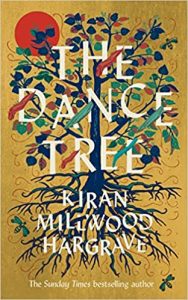 The Dance Tree by Kiran Milwood Hargrave – This historical fiction novel takes place in 1518 France and centers around a dancing epidemic (yes, really. Check it out, a very bizarre story). The story follows Lisbet, a pregnant farmer’s wife whose sister-in-law was involved in a scandal that resulted in her being packed away for seven years. But now she is back, along with strange events occurring in the town. It was a good set-up but The Dance Tree failed to live up. I do give Ms. Hargrave an extra star for writing a historical fiction story set in a less discussed time period, but other than that there isn’t much else to say. Three stars.
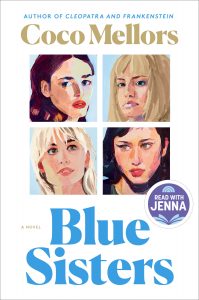 Blue Sisters by Coco Mellors – A literary fiction focusing on the three surviving Blue sisters, Blue Sisters is very much a character study and an analysis of how grief can affect the family unit. As the Blue family approaches the one year anniversary of the death of the fourth sister, the three girls reflect on their past and where they are now. As they come together one last time to get the family home ready for sale, they are forced to confront their past mistakes and their unclear futures. Blue Sisters is a book I had been excited to read for a while now and unfortunately it didn’t meet my expectations. While Ms. Mellors is a gifted writer and some of the sentences she weaves together are impressive, there wasn’t enough here for me to rave about. Another three star read.
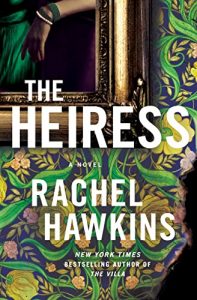 The Heiress by Rachel Hawkins – Unfortunately, I think this is the year where I have to admit to myself that while Rachel Hawkins’ books have really interesting premises, they almost never live up to their potential. The exception to this is probably The Wife Upstairs, which I gave four stars, but everything else has fallen underneath that and The Heiress is no exception. This was sadly another DNF for me. I got 100 pages into the story and had no connection with any of the characters or, frankly, cared about the plot.
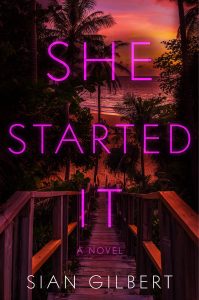 She Started It by Sian Gilbert – Best friends Annabel, Esther, Tanya, and Chloe seem to have the world at their feet. They are all successful, beautiful, and still close to one another after many years of friendship. They are hard to forget, which may explain why they suddenly get invitations to attend the hen party of Poppy, a girl they went to school with. Only odd part is, the four friends were never close with Poppy and were more like bullies to Poppy than friends. From the summary, you can tell that She Started It has an interesting premise. That being said, if you have read a thriller book in the last few years, you have probably already read this book. There are a couple of plot twists in this story, all of which I mostly guessed and the big reveal at the end was something any reader would have picked up on at the beginning of the book. Still, for the occasional reader there are plenty of thrills and it is fairly enjoyable. 3.5 stars.
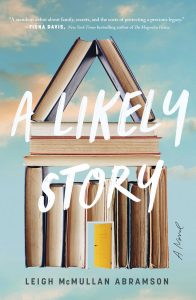 A Likely Story by Leigh McMullan Abramson – I’ll admit, I had never thought of picking up A Likely Story. It had never been on my radar and the only reason why I had a copy of it was because I got it on clearance at one of Barnes & Noble’s end of the season sales. And, honestly dear reader, I need to stop doing that. A literary fiction centering on a grieving daughter and her now deceased mother, through a series of flashbacks, A Likely Story focuses on family relationships and what some people have to give up in order for other people to succeed. In this case, the mother sacrificing her career so her husband could become a successful writer. But, Ms. Abramson’s writing didn’t click for me and very quickly I started to lose interest. A DNF for sure.
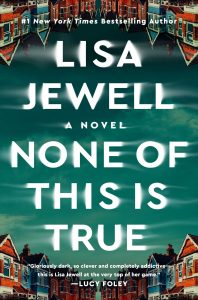 None of This Is True by Lisa Jewell – Guess what reader? We are actually ending on a strong note! I know, kind of surprising given how I’ve graded all the other books, but None of This Is True is an excellent read. If you want a full review, you can head to https://rachelrheil.com/blog/2025/06/none-of-this-is-true-by-lisa-jewell-review/. A great, slow burn read that deservedly earned 5 stars from me.
 On her forty-fifth birthday, Josie is able to convince her husband to go out for a celebratory birthday dinner. While she should be celebrating this milestone, Josie can’t help but feel that her life hasn’t turned out the way she hoped. She married young, had her two daughters early, and is now stock in a rut. And she might if she had stayed in that rut if she didn’t run into Alix Summer.
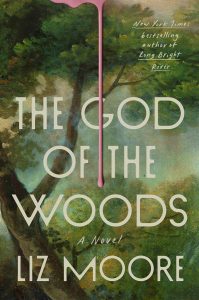 The God of the Woods by Liz Moore – Last year Ms. Moore’s Long Bright River ended up as one of my honorable mentions for best books of 2024. Despite her works being quite long, they hold my attention and I’m expecting the same for her latest release, The God of the Woods. Set at a summer camp in 1975, where a thirteen year old girl goes missing we follow a camp counselor trying to find her. But this might not be all it appears to be and I’m sure the ending will provide quite the interesting twist.
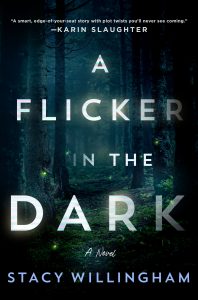 A Flicker in the Dark by Stacey Willingham – When Chloe was a child, six teenage girls went missing. The killer was caught, and the killer turned out to be Chloe’s father. Twenty years later, Chloe has started a new life for herself. But when girls begin to mysteriously disappear again, Chloe finds herself drawing parallels between the events happening now and those that occurred all those years ago. Is she making connections that aren’t really there or did the police arrest the wrong man? A Flicker in the Dark promises to be a delicious, twisty turny thriller and I can’t wait to finally pick this one up.
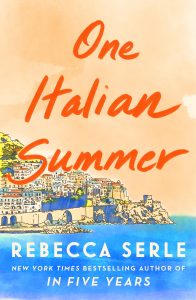 One Italian Summer by Rebecca Serle – What’s summer without a good book that transports you to another country? And is there a better country to daydream about during this hot summer months than Italy? Following a young woman who goes on a two week holiday in Italy, this promises to be a fun, heartful, and humorous story that will make me dream of pasta, Aperol spritzes, and gelato.
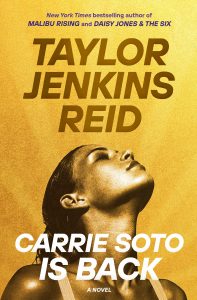 Carrie Soto Is Back by Taylor Jenkins Reid – While beloved by the BookTok community, Taylor Jenkins Reid is an author that is either a hit or miss for me. I loved The Seven Husbands of Evelyn Hugo but didn’t see the hype for Daisy Jones and the Six. Which way will Carrie Soto fall? So far (I just picked this one) so good. It follows a retired tennis player who decides to re-enter the world of tennis after a new, younger woman threatens to break all her records. Will I want to become a tennis fanatic after this? I’ll report back soon to let you know.
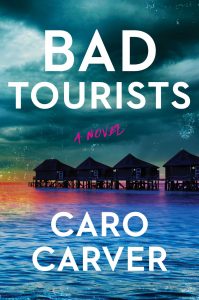 Bad Tourists by Caro Carver – A 2024 release, this thriller focuses on three sisters who go on a post divorce trip to the Maldives. But while the women hope to unwind and forget about their messy divorces, a killer is lurking amidst the picturesque resort and the three friends will have to work together to catch the killer.
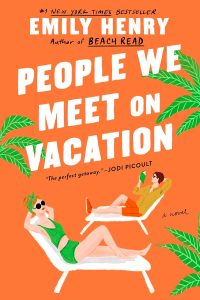 People We Meet on Vacation by Emily Henry – So my first dive into an Emily Henry book wasn’t exactly a smashing success. I gave Happy People three stars but once I heard from other book reviewers that they agreed that book wasn’t one of her best, I decided to give Ms. Henry another chance and pick up one of her works that is absolutely adored, People We Meet on Vacation (it was also available at my local Half Price Books, a rarity so I figured it was a sign). Centered around Poppy and Alex, who had been friends for a decade before a bad following out, they find themselves once more vacationing together and romance inevitable ensues.
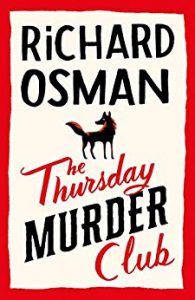 The Thursday Murder Club by Richard Osman -A leftover from my Spring 2025 TBR, I really need to get to this mystery thriller since the Netflix adaptation is hitting sometime this summer.
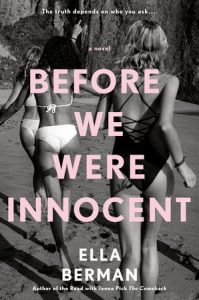 Before We Were Innocent by Ella Berman – Ten years ago, three friends went on a vacation to Greece. But only two came back. While never convicted, the two surviving girls fell under public scrutiny. While one tried to get on with her life and another chose to capitalize on the infamy, the events of that fateful trip are about to bubble to the surface all over again. I haven’t heard much else about this book, reviews wise, so I’m excited to see if I have stumbled upon a hidden gem.
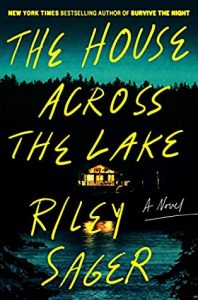 The House Across the Lake by Riley Sager – Last Summerween I read my first Riley Sager book (The Only One Left) and I found it be very quick and all consuming read, a hard one to put down. Two years earlier Mr. Sager released another summer book that got everyone talking; The House Across the Lake. Focusing on Casey, a recently widowed actress, who is spending some time at her family’s remote cabin. When she saves a neighbor from drowning, Casey becomes entangled in another couple’s lives until one day the wife goes missing. Promising to a an adrenaline filled ride, I’m looking forward to reading my second Riley Sager novel.
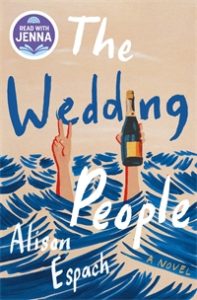 The Wedding People by Alison Espach – This romance book was not on my radar until the end of last summer when one of the bookstagram accounts I follow (@emilybookedup) couldn’t stop raving about it. Focusing on Phoebe, a young woman heading to Newport, Rhode Island for a vacation, she gets sucked up in a wedding she has nothing to do with and hilarity becomes the order of the day. The premise itself doesn’t sound overly interesting but given how much hype I’ve heard I’m willing to give it a try. And who can go through summer without a good wedding book?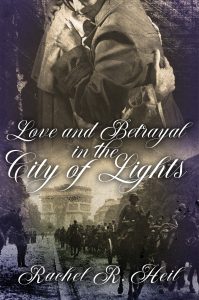



 When her boyfriend Kiernan suggests they go on an exclusive hiking trip to the Rocky Mountains during the off-season, Christa is less pleased. But loves make one do stupid things and Christa reluctantly agrees to join Kiernan and a handful of other adventure seekers on the adventure.