Hello fellow readers! A little bit ago I shared with you that I would be participating in the Summerween Readathon. If you missed my initial post, you can check it out here; https://rachelrheil.com/blog/2024/07/summerween-readathon-2024/.
You might recall that this fun, Halloween-inspired readathon was going to last a week and that I was going to attempt read four books. They were The Only One Left by Riley Sager, Bright Young Women by Jessica Knoll, The Fury by Alex Michaelides, and The Midnight Feast by Lucy Foley.
So, did I accomplish my reading goal and what did I think about the books I read? Read on as I wrap up the Summerween Readathon of 2024.
Overall, I read three of the four books I had planned for this readathon. Despite falling a bit short on my goal I’m overall happy with this. As much as I enjoy reading I love to also spend time with family and friends, and do a little shopping of course. To get a glimpse of what I was up to over the last week, you can check out my Instagram page (@rachelrheil). If you aren’t already following me on Instagram, make sure to give me a follow as I plan on sharing more glimpses on what I am up to (writing and reading wise as well as personally), especially as we approach my favorite time of the year.
But that aside, what did I think of the three books I actually read? I’m glad you asked.
The Only One Left by Riley Sager – In 1929 socialite Lenora Hope was accused of brutally murdering her parents and sister. But a lack of evidence allowed her to walk free and the murders have become a dark chapter in her small town’s history. Now, in 1983, home-health aide Kit is assigned to take care of Lenora, a task that does not delight Kit but with no other options she has little choice. She is not entirely alone as Lenora has maintained a small but loyal staff but Kit can’t shake the feeling something is terribly wrong, only confirmed by Lenora herself when she agrees to tell Kit everything about that fateful night in 1929.
Though the premise was excellent and the story kept me interested, this was not a 5 star read for me. While the plot was well developed and the imaginary was vivid, the character development needed some work. Kit in particular needed a bit of an overhaul. I don’t mind having a character who is struggling with a past mistake or haunted by something he or she did, but Kit offered nothing else beside those past mistakes. As the reader we didn’t get to know what else makes up Kit and what guides her to make the decisions she does. Speaking of decisions, some of Kit’s choices are downright odd, strange, and insensitive, if you take in consideration her profession. For example, she is on the job for less than 48 hours before she is asking Lenora if she killed her family. Not exactly the best way to ensure you get to keep your job. My rating is 3.5 stars out of 5.
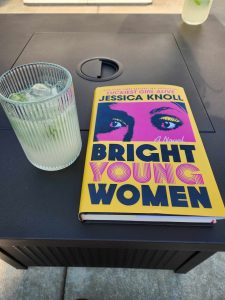
Bright Young Women by Jessica Knoll – It’s 1978 and aspiring lawyer Pamela Schumacher is the president of her sorority at Florida State University. Everything in Pam’s life is seemingly perfect; she has a coveted but slightly stressful role in her sorority, she has a steady if bland boyfriend, and can always rely on her best friend Denise. But when an intruder breaks into the sorority house one fateful January night and brutally murders two students and gravely injures an additional two, Pam’s entire world is flipped upside and she tries the maintain order as best as she can. But that little bit of sanity is quickly snapped when Pam learns the intruder might be a prolific serial killer who has terrorized Pacific Northwest and Pam might just be his next victim. After all, she was the one who saw him as he made his made dash out of the sorority house. Joining forces with Tina Cannon, a wealthy young woman whose best friend Ruth was a victim of the same killer, Pam is determined she will find out who killed her fellow sisters before he hurts anyone else.
If the summary doesn’t give it away, Bright Young Women is a fictional retelling of Ted Bundy’s serial killings and while his actions are at the heart of the story, Ms. Knoll decides not to focus on the killer (or The Defendant, as he referred to throughout the story) but on the women affected by his murderous rampage. For that, I have to give Ms. Knoll high praise. As true crime writer Ann Rule (who wrote one of the definitive books on Bundy) noted, the victims and their loved ones are often lost in serial killer stories and more often than not are just viewed as a name on a list. I also appreciated Ms. Knoll making a conscious effort to not name Bundy in the story but refer to him as a nameless defendant since, as Pam discusses throughout the book, naming him gives him power and a legacy when he really should be forgotten and not given any time or publicity, only to answer for his crimes and receive justice.
Despite this strengths, I felt that the second narrative, told from the perspective of Ruth, one of the victims, took away from the story. I like the idea of having one of the storylines being told from one of the victim’s but the events leading up to Ruth’s sad death didn’t add much to the story and I found myself wishing the second storyline was told from Tina’s point of view and the barriers she faced in trying to get the police to take her seriously and get Ruth’s murder solved. Tina mentions throughout the story that issues she had in getting justice and that would have been very interesting to read about. It was a lost opportunity. I gave this story 3.5 stars out of 5 as well.
The Fury by Alex Michaelides – Lana Farrar is one of cinema’s most famous leading ladies and her surprise retirement a few years earlier sent shockwaves throughout the industry, devastating colleagues and fans alike, including Lana’s fan and close friend Elliot Chase. But, unlike Lana’s legion of other fans, Elliot still gets to see Lana and is one of a few people she invites to join her, her husband, and son on their private Greek island. But when a murder occurs, everyone is a suspect but the person who pulls the trigger might just be the person you least expect.
It is no secret that I’ve become a big Alex Michaelides fan. I’ll recommend The Silent Patient to anyone willing to listen and The Maidens was a juicy addition to the dark academia genre cannon. So when Mr. Michaelides announced his third book, there was no hesitation on my part to snatch it up. The plot may sound formulaic, but I was positive Mr. Michaelides would put a new spin on it and create a twist that would surely delight. And, for the most part, he achieved that. There was a good twist about halfway through the story and the characters were all fairly well developed. The writing flowed well and it is a quick and easy ready.
Unfortunately, I would be remiss to not mention I was also a bit disappointed. After the spectacular twists of Patient and Maidens I was expecting just a good of twist but when that was revealed I was left wanting more. I had guessed the murderer fairly early on and I don’t think the narrative structure helped that earlier discovery. I think The Fury would have benefited from a different narrative structure but as it was now, there wasn’t much mystery to be solved. Nonetheless, it was still a worthy read but would recommend it to someone who hasn’t read Mr. Michaelides’ other works. A solid 4 out of 5 stars.
And this is my reading wrap up for the Summerween Readathon of 2024. This was such a fun and enjoyable readathon and I hope to be participating in next year.
Hello fellow readers! Love and Betrayal in the City of Lights is finally hear and I’m so excited to share Jean and Annette’s story. As always I hope you love this story and look forward to hearing your thoughts.
★•.¸.•**•.¸.•**•(¸.•*´`*•.¸)**•.¸.•**•.¸.•★
1992. Josephine has many regrets. Despite having a family and forging a new life in post-war America, Josephine is haunted by her past while living in German occupied France during World War Two. She harbors a dark family secret that she can no longer keep inside.
1941. Jean Janvier is a philosophy student, etching out a meager life with dreams of being an accomplished poet. He surrounds himself with close friends and philosophical discussions at Café de Flore. His closest confidante is his sister, Josephine, and together they live with their overbearing and socially conscious parents, who push their children to achieve the unobtainable goals they have set for their family legacy. But Jean’s perfectly ordered world is disrupted by the arrival of a new member to his inner circle, Annette Zabek. Beautiful, intelligent, and cultivated, it doesn’t take long for Jean to fall in love with Annette. As their relationship grows, Annette reveals a secret that could endanger them both. Soon, Jean will discover that his greatest enemy isn’t the German occupying forces but someone much closer to him.
Inspired by the true story of Occupied France’s Romeo and Juliet, Love and Betrayal in the City of Lights tells a tale of love, family bonds, and betrayal.
It’s #TeaserTuesday and the last one before the release of Love and Betrayal in the City of Lights. If you haven’t ordered your copy yet, make sure you do! As always, I hope you enjoy today’s teaser.
“It suits me well enough,” Jean replied. “One bedroom, a small kitchen, and workable living space. I purchased a little desk from Annette’s neighbor and it fits in the space just fine.”
Jean realized his mistake a moment later than I did. My stomach clenched and I was afraid to look at either of our parents.
“Annette?” Mother purred.
“Whose Annette?” Father demanded, standing next to the couch and Jean.
Jean brushed his hand over his forehead. “The woman who came by here that one time. Who stayed the night.”
A sense of realization came over our parents’ faces, but neither said anything.
Itching the back of his, Jean concluded, “We have begun seeing each other.”
I nervously turned my head to Mother, but her reaction was positive. “Oh, how wonderful! What is she like? Is she from Paris?”
“What’s her father do?” Father demanded.
Slightly taken aback by the positive response, Jean took a moment to remember Annette’s father’s occupation. “He’s a tailor. He owns his own business in Nancy.”
“Nancy!” Mother proclaimed. “Heavens, does this young girl live in Paris by herself?”
“She does,” Jean admitted, sliding his hand into his coat pocket so he could play with her carton of matches to ease his anxiety.
“I can’t believe her father would allow her to be so far away from the family home,” Father said in a disapproving manner.
“She was attending school,” Jean countered, not remembering he shouldn’t use the past tense—our parents immediately noticed.
“Was?” Father raised an eyebrow.
“Did something happen?” Mother added.
I felt the room become more claustrophobic and while I wanted to run out of the room, I couldn’t. Jean was going to need my support for the next bit of information he was going to drop on our parents.
Jean inhaled before saying, “The government no longer allows Jews to attend university. That is why she is no longer in class.”
Abrupt and unexpected, the words rendered Father and Mother speechless. In the ensuing silence, I wondered why my brother hadn’t just lied about Annette, but I already knew. A lie would suggest he was embarrassed by her, ashamed of who she was, and my brother wasn’t going to be that person anymore.
For that, I applauded him.
Meanwhile, my father exploded. “You are seeing a Jew! Have you gone mad?”
Jean took the screaming with little emotion. “I love her.”
“You love her!” Father shrieked.
“How can you love her?” Mother asked as if it was the easiest question in the world to answer.
“You must give her a chance.” Jean looked between Father and Mother. “She is a wonderful person. Talented, educated—”
“And an enemy of the state,” Father said his version to the end of that sentence.
Jean’s chin dropped as he stared Father down. “To some afraid of differences.”
“It’s not that we hate the Jews,” Mother was jumping in, “but we expect you to be with a Catholic girl. A person with your own values and traditions.”
Jean turned to Mother. “Annette and I share the same values, and she was raised in France, so we share many traditions, just none of the religious ones.”
“This is absurd,” Father huffed, his face reddening more with every moment.
“Jean,” Mother sighed heavily, “please think this over. You may have a lot in common with this young lady now, but that will change. She’ll bring you nothing but trouble.”
“Jews are notorious for being troublemakers,” Father hastily added. “Just like in Germany two decades ago. People were starving, barely able to get by, and the Jews did nothing to help, locking themselves up in their big homes and ignoring those in need.”
My brother didn’t miss a beat. “Oh? Like us now?”
“Jean!” Mother shouted.
I stared at Jean, eyes wide in shock. Up to that point, I had not seen the correlation, the double standard we had held up to Annette’s people.
Father’s chest rose and fell. “Get out of my house.”
Jean didn’t respond as he rose to his feet. He turned to Mother and I, gave us a nod, and walked past our Father. He opened the apartment door and strode out, shutting it softly behind him.
Father whipped his body toward us like a windstorm. “Our son has completely gone mad!”
“What could he be thinking by getting mixed up with a Jew?” Mother seemed equally horrified.
I wanted to rebuke them, to follow in Jean’s footsteps, but the words kept getting caught in my throat.
“I’ll tell you this,” Father reached into his pant pocket and pulled out the piece of paper that held Bella’s information. “I will not be welcoming him back with open arms when this girl ruins his life.” He marched over to the garbage bin and tore up the note, throwing the remains in. “That is for damn sure!”
“But what if she doesn’t?” Mother asked as Father returned to where she and I stood.
“I’ll stop it, one way or another.”
“How?” Mother seemed frightened.
“Don’t you worry.” Father was suddenly at ease. “I have a way to make sure this Annette does not ruin our son.”
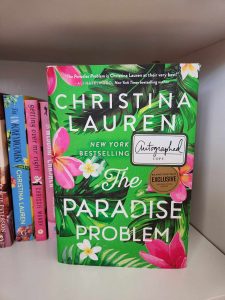
When Anna Green agreed to marry fellow student Liam “West” Weston she thought it was to gain access to affordable housing while studying at UCLA. She also thought that when they graduated she had signed the divorce papers, allowing her and West go on their merry ways. So when West shows up on her doorstep three years later and tells her they aren’t technically divorced yet, Anna is just a little bit surprised. But that’s not the only surprise in store for Anna as West has another request; pretend to be his loving, caring wife and join him and his family on a private island for West’s sister’s wedding.
Oh, and the Weston family has a lot of money (if you hadn’t guessed it already) and money is the exact reason why West is making such a request. Due to antiquated clause in his grandfather’s will, West will lose his sizable inheritance if he gets divorced from his spouse after less than five years of marriage which, for his fake marriage to Anna, is a few months shy of hitting. So, would Anna be so kind as to do West this small favor?
Well….alright.
Thus begins a fun, tropical, and sexy journey for Anna and West who not only have to keep up the facade of a happy marriage but also navigate the landmines that is the Weston family. But at least there is a pretty ocean to look at.
I’ve only read one other Christina Lauren book before The Paradise Problem and that was The Unhoneymooners, a book I absolutely loved and would recommend as a great summer read. The Paradise Problem has very similar vibes to The Unhoneymooners such as a fake relationship scheme, a tropical location, and plenty of laughs along the way.
Oh, and some pretty hot scenes, if you are into that (wink wink).
As the summary and book cover suggest, this is an excellent poolside or vacation getaway read. It is easy to read, entertaining, and not something that requires intense concentration. Anna and West’s relationship is fairly well developed and their character development throughout is good. Both learn lessons and have satisfy conclusions to their story.
All that being said, the reason why I didn’t give The Paradise Problem five stars is because, at times, the narrative became a bit too serious. I’m not against fun books, particular romances, having serious parts and on the contrary I do find them helpful to move the stories along. After all, The Unhoneymooners had some pretty serious parts, but they didn’t linger for too long. In The Paradise Problem, the last 20% of the book became overly heavy, to the point that when the ending came, it didn’t seem like many of the problems were solved.
There is also a strong narrative weaved throughout the book about being rich vs. poor and while I am certainly nowhere near being in the 1% and can certainly agree that members of that group can spend their money in stupid, foolish ways and should redirect some of their wealth to helping others, I did grow tired of that constant discussion after reading half the book.
I get it. The rich suck. We can all agree. Let’s move on.
Of course one may argue that was the entire point of the book and I can respect that but, again, it didn’t need to repeated as much as it was.
All that aside, I did really enjoy this book and will read future Christina Lauren books. I would recommend this for a quick getaway read, whether you are actually going somewhere or are dreaming of sandy beaches and blue skies. It certainly gives off the paradise vibes.
Too early? Maybe for some but as someone who has always preferred Fall to the sometimes blistering summer heat, I am more than ready to be drinking out of my spooky mugs and decorating my house with pumpkins, witches, and leaves by the time the last firework goes off on the Fourth of July.
And one of my favorite ways to do that is to partake in the Summerween Readathon, created by _myfictionalworld (also known as gabbyreads) and oliviareadsalatte on Instagram and YouTube. If you aren’t familiar with this popular readathon, it is a week long event in which fellow book lovers are encouraged to read thrillers and chillers that give you the spooky vibes in the summertime.
In other words, something that is right up my alley.
The readathon is taking place from July 5-11th and you can check out the prompts and Instagram challenges on the event’s Instagram page (@thisissummerween). Below is my very ambitious tbr, filled with plenty of thrills and screams to keep me dreaming of cooler days ahead.
At the end of the week long readathon I’ll be sharing with you my thoughts about all the books I’ve read and which ones I would recommend to you, posted here on the blog page. And if you have any spooky book recommendations for me, feel free to post it down below!
Happy Tuesday everyone! Here is this week’s teaser of Love and Betrayal in the City of Lights, out July 12th. Enjoy!
Though everyone at the table said hello, Claude and Bella only seemed interested in the argument they had brought along with them.
For such a young couple, they fought like one that had been married for years. While Jean and Jacques found humor in their spats, it could also put a damper on the mood.
“Your problem is you never admit when you are wrong.” Bella was nearly shaking her fists at Claude as they plopped down in the seats between Jean and Annette. He watched as Annette scooted her seat closer to Jacques, who smiled with satisfaction.
Jacques leaned toward the couple. “What’s the trouble now?”
Claude snapped his head in the direction of his friends. “Nothing at all, if you excuse the fact that Bella believes our current political climate is good and fair.”
Jean raised an eyebrow in surprise but Bella was already explaining herself. “You are misquoting me. All I said was that given what is going on in Britain and the Soviet Union, we are far better off than most. Is it ideal? Of course not. I hate the boches as much as any other patriotic Frenchman, but you cannot deny the fact that things here have been easy on us.”
“Because the Germans have us in a death grip!” Claude hissed, attempting to control his rage. “If we act out, we die. Just look at those students who attempted to protect Armistice Day. They were arrested and hauled off to God knows where. You believe that makes us better off?”
As the couple continued to argue, Jean felt Yannick tap his arm and he turned to her. Leaning in and whispering, she asked, “Do they always fight like this?”
Jean nodded. “Unfortunately.”
Yannick frowned at Claude and Bella. “Then what’s the point of being together?”
“Don’t know.” Jean wanted to laugh. “Still trying to figure that out.”
Yannick shrugged indifferently and the waiter brought over four cups of coffee. While Yannick focused on her coffee and Jacques attempted to play peacemaker between Claude and Bella, Jean once more focused on Annette. Instead of finding her making a face or mouthing a comment about Claude and Bella’s behavior, she appeared to be sinking into despair. What on earth was going on with her?
“Neither of you are listening to me!” Jacques was practically shouting.
“Maybe they can’t hear you,” Yannick said, finally removing her interest from her coffee.
Jacques twisted his mouth. “Probably not.” He looked at Jean. “Can I switch seats with you, old man?”
Jean was grateful, already rising to his feet. “Be my guest. I don’t want to lose all my hearing before I’m thirty.”
Switching seats, Jean plopped down next to Annette, who remained in a melancholy mood. Seeing her sad state, Jean felt the urge to say something.
As he leaned over to Annette, Jean could smell her rich perfume. He detected the overwhelming scent of rose with a hint of vanilla.
“Don’t fret about Bella. She’s not a collaborateur, just a bit misguided.”
Annette seemed to finally register Jean was talking to her and looked at him. Her composure had changed, a large smile gracing her face with soft and appreciative eyes. Still, there was an unhappiness there that Jean could not place. Did she know of someone who was a collaborateur, or someone else who was arrested by the Germans for no reason? Many French people did, so it wouldn’t have been out of the realm of possibility.
Trying to distract her, Jean cleared his throat and nervously inquired, “So why did you come to Paris? I mean, I know it was for school, but not many people want to come to Paris these days.”
Of the five million who had called Paris home before the Nazis came goose stepping under the Arche de Triumphe, only some roughly three million had returned, with many choosing to remain away from the epicenter of the occupation.
Annette admitted with a slight shrug, “It does sound mad when spoken out loud.”
“I’m not here to judge,” Jean encouraged.
She seemed amused. “You might be the first.” Facing forward, she said with more strength in her voice, “My family thought I had lost my mind when I made the decision. My mother was nearly on her knees at the train station as I climbed aboard. I couldn’t even wave goodbye to them from the window. I thought I might back out.”
Despite his turbulent relationship with our father, Jean couldn’t imagine leaving his family and neither could I, for that matter. Annette was brave for that.
“But I want to live my life.” She sighed heavily. She looked at Jean, who met her eyes. “Why should I let others control what I can and cannot do?”
Hello everyone! Here’s today teaser for Love and Betrayal in the City of Lights. Enjoy!
As Jean told me, he was stepping outside the university’s massive doors when he heard Claude call after him.
“Jean! Jean!”
He stopped short, turning around and finding Claude and Bella quickly approaching. To the outside, their appearances suggested things had returned to normal. Claude was immaculately turned out, and Bella was wearing her usual uniform of slacks, a short sleeves blouse, and a neck scarf. But, as my brother found out, outward appearances can be deceiving.
“Hello,” Jean greeted.
“We need to talk,” Claude said, his chest rising and falling as if he had run a race.
“Sure.” Jean didn’t see the warning signs.
They moved over to an area with a bench, and while Jean and Bella sat next to each other, Claude remained standing in front of them.
Claude cleared his throat and questioned, “Are you seeing Annette?”
“Romantically,” Bella cut in with a tone that struck Jean’s body like knives.
Though taken aback by the brazen nature with which they’d broached the subject, Jean chose not to deny it. “I am. We’ve been out a few times.”
Claude and Bella exchanged glances.
Though Jean felt he already knew the answer, he asked, “Is there a problem?”
Claude kicked a pebble. “Not necessarily.”
“Yes,” Bella added. She stared at Jean with an uncompromising glare. “Jean, you can’t see her.”
My brother burst into laughter. “Bella, since when do you decide who I can and cannot see?”
“This isn’t a joke, Jean,” Claude agreed and Jean looked at his friend with disbelief. “She’s not good.”
“Says the man who was chasing her no less than a month ago.” Jean’s tone was sharp and Claude’s eyes darted down to the ground.
“She uses men,” Bella stepped in. “And she’ll use you.”
“Use me for what purpose?” Jean demanded.
Claude shrugged his shoulders. “Don’t know, but it can’t be good.”
“This is ridiculous.” Jean got to his feet and stepped away. “Just because you both had your ups and downs with Annette doesn’t make her a bad person or someone who is a user.”
He thought the dressing-down would be enough, but Claude and Bella seemed willing to risk everything for Jean to stop seeing her.
Bella retaliated. “It’s either Annette or us.”
Jean’s mind went blank. Who were they to demand such a thing? Unable to think, Jean slowly turned away and left. He heard Claude call after him—or he thought it was Claude—but he didn’t react. All the happiness and elation of the past few weeks evaporated.
Hello fellow readers! Somehow we’ve made it to June, which means we are already halfway through 2024! Not sure how that happened but instead of trying to figure that out, I am here to share with you my answers to the mid year freakout tag.
I did this last year and enjoyed sharing with you my thoughts and impressions of the books I have read so far. So I’m back to do it again. As a little recap, my reading goal for 2024 is to read 52 books. Using what I have read (and what I have yet to pick up) I’ve answered the following questions from the mid year freakout tag, which I highly suggest you do as well. Now, let’s get started.
1. How many books you’ve read so far. 27
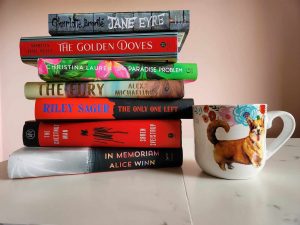
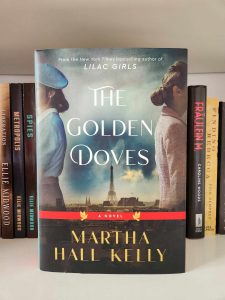
2. Best book you’ve read so far this year. Unlike last year when The Silent Reader was the clear winner of 2023, I’m not yet sure which book might take the top spot for my favorite book I read in 2024. You’ll have to keep guessing! But if I had to choose a clear favorite from the first six months of the year I would have to give it to The Golden Doves by Martha Hall Kelly. A historical fiction thriller set in post-World War Two Europe, this book had everything I wanted and more.
3. New release you haven’t read yet but want to. No matter what happens this year, Lucy Foley’s newest novel, The Midnight Feast, will be read before we say goodbye to 2024.
4. Biggest disappointment. I had high expectations but unfortunately Alice Winn’s In Memoriam fell a bit short for me.
5. Biggest surprise. Despite it’s violence and large page count, The Chestnut Man was superbly written.
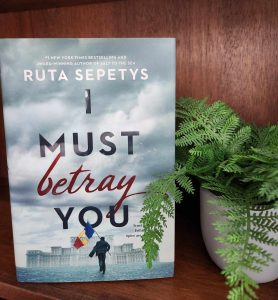
6. Favorite new author (debut or new to you). I read my first Ruta Sepetys novel this year (I Must Betray You) and I can honestly say it won’t be the last one I will read by this talented author.
7. Book that made you happy. Christina Lauren must have a degree in making people smile. The Paradise Problem made me smile and happy for many reasons.
8. Most beautiful book you have acquired this year. Not surprisingly this is a special edition of a classic. See below for the gorgeous edition of Jane Eyre that I snatched up recently at Barnes & Noble.
(Photo credit: Penguin Random House)
9. Best sequel you’ve read so far. Finlay Donovan is back and she is knocking ’em dead.
10. What books do you need to read before the end of the year? The Fury by Alex Michaelides and The Only One Left by Riley Sager are my top priorities.
Hello everyone! In anticipation of the release of Love and Betrayal in the City of Lights I’m starting up #teasertuesday where I’ll share a teaser of the book every week until it’s release. As always enjoy and make sure you preorder your copy today.
“I can’t believe Claude wouldn’t walk me home.”
Annette repeated the phrase for the third time and as he had done the two previous times, Jean shrugged. “Claude doesn’t always think before he speaks. It’s not one of his talents.”
It was evening, and Jean had nervously glanced at his wristwatch when they left Claude’s apartment, noting they had about forty minutes before the curfew was enforced. Thankfully, Annette only lived about ten minutes away. If Jean hurried, he would be back home with a few minutes to spare. It was a tight timeframe, and while Jean wanted to walk a bit faster, Annette’s slow pace forced him to match her while he offered a sympathetic ear to her complaints about Claude.
“Is he always like this?” Annette looked at Jean. For a moment he could almost see the flicker of her second-guessing her interest in Claude.
Jean wanted to give an emphatic yes, but then he focused on Annette’s eyes—soft, gentle, and cloaked in a sadness he knew went deeper than what had happened that afternoon.
“No, he isn’t,” Jean lied effortlessly. “I think it was more the alcohol speaking than Claude himself.”
Annette seemed to ponder what he said before nodding slowly and looking across the street. Despite walking along a busy boulevard, the sidewalks were mostly quiet except for a couple here or there scurrying by, talking in hushed whispers or restrained giggles.
Still not looking at Jean, Annette said, “I haven’t been very kind to you lately, have I?”
Jean was surprised by the question. “What makes you say that?”
Turning her head to look at him, Annette smiled sweetly. “You really are a terrible liar.”
Not as bad as Annette thought, but Jean slouched his shoulders. “I understand why you were upset with me. You told me something deeply personal and I didn’t respond appropriately. For that, I’m sorry.”
“No.” Annette shook her head. “I should be apologizing. I…overreacted.”
That flabbergasted my brother. “You did not overreact in the slightest. I would have done the same.”
“What a horrifying thought.” Annette laughed, which seemed to echo down the abandoned street.
Jean was not amused. “I’m serious, Annette. You were within your rights to act the way you did. I’m the one who did not act right.”
Silence. The only noise was a distant car engine, the whispering of occasional wind, and Annette’s heels clicking against the sidewalk.
Her building came into view, and soon they were standing in front of it. Jean expected Annette to head right inside, but instead she stopped and turned to face him.
“Thank you,” Annette said softly.
“Of course.” Jean was just as quiet.
“Not only for the walk,” Annette spoke methodically, “but for your understanding with…that.”
Jean nodded once. “If you ever need to talk to someone, I’m here.”
They stared at each other without saying another word. Then, after what felt like a lifetime, Annette murmured, “I should go inside. Good night, Jean.”
As she turned away, Jean was seized by a realization: he loved Annette. No matter how much he propped up Claude, it would never erase his feelings for her. He had to do what Jacques had told him to do a long time ago. He had to take a chance.
“Annette.”
She stopped and faced him.
Despite the overwhelming nausea, Jean refused to back away like he had in the past.
“Would you like to go out with me? On a…outing?”
Annette’s face cracked into a smile. “You know, you’ll be the third man I’ve seen in this friend group.”
Jean’s body shook, but he outwardly appeared calm. “I don’t care. As long as I’m the last.”
Annette giggled, touching the side of her face before recovering and staring into his eyes. “I would love to.”
Jean felt an unexplainable happiness ripple through him and he was sure he was smiling like a fool.
Annette was far more composed and practical. “You should go. Curfew is enforced in fifteen minutes.”
“Oh.” Jean blinked rapidly. “Yes, you are right. Well, good night!”
Annette turned away, waving her little fingers. “Good night, Jean Janvier.”
She was already on her way before Jean was able to whisper, “Good night, Annette Zabek.”
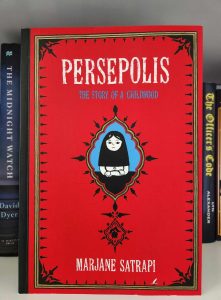
In 1979 ten-year-old Marjane is living in Iran forward thinking parents. Smart and blessed with a rich imagination, Marjane has a happy childhood that is marked not just by normal childhood experiences but also by the rumblings and changes occurring in her country. Like many in Iran, Marjane’s parents protest against the Shah’s regime and demand change. When that does happen, Marjane’s life is changed forever. As the Ayatollah ushers in a new tyrannical regime Marjane and her family find themselves in challenging circumstances that ultimately leads them to make an impossible decision.
I’ve heard many good things about this graphic novel and I’ve been meaning to pick it up for a long time. So when I saw it as part of a “Banned Books” display at Barnes & Noble I decided now was the time to grab a copy.
I don’t read many graphic novels so the format was a change for me but I would consider it a strong strength of the book. The additional detail Ms. Satrapi can provide but using illustrations adds another layer to the story and helps you step into Ms. Satrapi’s shoes as she goes from a fun loving, carefree child to a teenager who values her independence so much she openly defies the generation, much to the concern and worry of her parents.
One of the other great strengths of this story is that Ms. Satrapi does not attempt to hide anything in her retelling. She freely admits that her family wanted a revolution to occur, a fact that some post-revolution accounts leave out, but when it does happen it leaves the family wondering if they had wanted the right thing. Ms. Satrapi also shows how the family attempted to live under the new restrictions of the government until it ultimately became impossible and a threat to Ms. Satrapi’s often safety.
This is an excellent account of life in Iran during the late 1970s and 1980s and I would highly recommend it, even one isn’t a fan of graphic novels. Which once more lead to the absurd question of why this book has been banned in the past. Ultimately one could argue some political reasons but I’m not going to get into that. Instead, I would urge you to share this piece with anyone. While the book might not be suitable for very young children as the subject matter can be quite terrifying and there are a few (very minimum) swear words, I would say if you a family member who is around ten that it would be an excellent chose for them to understand this event in history. Books like these should be protected and that I why I recommend Persepolis.







 Hello fellow readers! Love and Betrayal in the City of Lights is finally hear and I’m so excited to share Jean and Annette’s story. As always I hope you love this story and look forward to hearing your thoughts.
 It’s #TeaserTuesday and the last one before the release of Love and Betrayal in the City of Lights. If you haven’t ordered your copy yet, make sure you do! As always, I hope you enjoy today’s teaser.
 When Anna Green agreed to marry fellow student Liam “West” Weston she thought it was to gain access to affordable housing while studying at UCLA. She also thought that when they graduated she had signed the divorce papers, allowing her and West go on their merry ways. So when West shows up on her doorstep three years later and tells her they aren’t technically divorced yet, Anna is just a little bit surprised. But that’s not the only surprise in store for Anna as West has another request; pretend to be his loving, caring wife and join him and his family on a private island for West’s sister’s wedding.
 Hello fellow readers! Somehow we’ve made it to June, which means we are already halfway through 2024! Not sure how that happened but instead of trying to figure that out, I am here to share with you my answers to the mid year freakout tag.
 3. New release you haven’t read yet but want to. No matter what happens this year, Lucy Foley’s newest novel, The Midnight Feast, will be read before we say goodbye to 2024.
 7. Book that made you happy. Christina Lauren must have a degree in making people smile. The Paradise Problem made me smile and happy for many reasons.
 Hello everyone! In anticipation of the release of Love and Betrayal in the City of Lights I’m starting up #teasertuesday where I’ll share a teaser of the book every week until it’s release. As always enjoy and make sure you preorder your copy today.
 In 1979 ten-year-old Marjane is living in Iran forward thinking parents. Smart and blessed with a rich imagination, Marjane has a happy childhood that is marked not just by normal childhood experiences but also by the rumblings and changes occurring in her country. Like many in Iran, Marjane’s parents protest against the Shah’s regime and demand change. When that does happen, Marjane’s life is changed forever. As the Ayatollah ushers in a new tyrannical regime Marjane and her family find themselves in challenging circumstances that ultimately leads them to make an impossible decision.